

Price cuts are turning up everywhere right now, and here’s what’s fascinating about them: the exact same “Reduced” sign means two completely opposite things depending on which side of the deal you’re standing on. Sellers see it and worry they’re about to walk away with less than they hoped. Buyers see it and assume something must be wrong with the house. Most of the time, both are reading it wrong. Let me show you what a price cut actually signals in this market, and then exactly what it means for you, whether you’re selling or buying.
First, the number that’s turning heads: 42%
This isn’t a vibe, it’s a measurable trend. According to HousingWire Data, the share of sellers cutting their asking price has climbed for seven straight months. Today, more than 4 in 10 active listings, about 42%, have had at least one price cut, and the typical seller is trimming around $17,560 off their original number.
Why is it happening? Simple supply and demand. With rates still elevated and more homes to choose from, buyers can afford to be patient and wait for the right price. So sellers who don’t start at the right number usually end up adjusting to it anyway. That’s the whole story. Now here’s what it means for each of you.

If you’re SELLING: a cut isn’t failure, but pricing right is everything
Let’s clear this up first, because I don’t want you losing sleep: a price cut is not a red flag, and it’s not a sign you did something wrong. With 4 in 10 homes doing it, you’d be in very normal company. But it is a loud reminder of the single most important thing in this market: price it right from day one.
The market has been moving fast enough this year that even a well-priced home can fall behind within a few weeks. If that happens, cutting your price to catch up to where the market actually is today isn’t a defeat, it’s smart. Homes that adjust tend to attract more buyers and sell closer to true market value than homes that stubbornly sit. As Jake Krimmel, Senior Economist at Realtor.com, put it, “Pricing to today’s demand is helping homes move and keeping more transactions alive in a high-rate environment.” Translation: the sellers who meet buyers where they are are the ones actually getting to closing. And doing it up front always beats chasing the market down later.
One more thing in your favor to understand: nationally, list prices have fallen about $26,000 from last year’s peak, though part of that is the normal seasonal softening we see every winter before spring bounces back. So don’t panic at headlines about falling prices; a lot of it is the calendar.

If you’re BUYING: that “Reduced” sign is your opening
Now your side. It’s tempting to see a price cut and think, “What’s wrong with it?” But flip that instinct. With cuts happening on more than 4 in 10 homes, the reduction almost always just means the seller is catching up to where the market already stood, not that the house is a lemon. And with affordability still tight, that is exactly the kind of opening you’ve been waiting for.
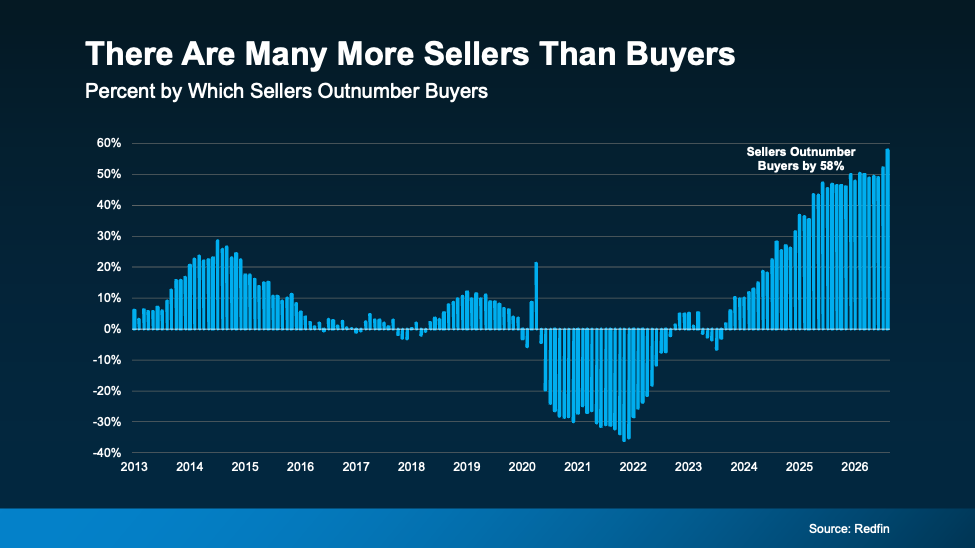
Here’s why your hand is stronger than you might realize. Redfin reports that sellers now outnumber buyers by about 58%, the widest gap on record, and roughly 7 in 10 markets nationally now favor buyers or are trending that way. That shift changes everything about how you can negotiate. You’ve got room to ask for a lower price, help with closing costs, repairs after inspection, or some combination of all three. That’s especially true for homes that have already sat for a few weeks, where sellers are usually the most willing to talk.
But here’s the local catch for Puget Sound
Everything above is the national picture, and I’d be doing you a disservice if I let you assume it maps perfectly onto our backyard. It doesn’t. While roughly 7 in 10 markets nationally have tilted toward buyers, our region has run tighter than average, with inventory still below balanced in a lot of neighborhoods. That means price cuts, while rising here too, aren’t as universal as the national 42% might suggest, and the negotiating room on a Kirkland or Ballard home can look very different from a home two counties away.
This is the part that matters most: a national statistic can be completely true and still not describe your street at all. Whether you’re pricing a home or making an offer, the only number that counts is what’s happening in your specific neighborhood right now.
A few questions I’m hearing a lot
Why are so many sellers cutting their prices right now?
With rates still elevated and more homes available, buyers can wait for the right price, so sellers who list too high adjust to meet the market. Per HousingWire Data, the share of listings with a cut has risen seven straight months, and more than 4 in 10 now carry at least one.
Does a price cut mean something is wrong with the house?
Usually not. With cuts on more than 4 in 10 homes, most simply mean the seller is catching up to the market, not that the home has a problem. It’s often an opening for buyers to negotiate.
How much are sellers cutting off their price?
The typical seller is trimming about $17,560 off their original asking price, per HousingWire Data, and national list prices have fallen roughly $26,000 from last year’s peak, partly a normal seasonal dip.
Is it a buyer’s or seller’s market right now?
Nationally it’s shifted toward buyers, Redfin reports sellers outnumber buyers by about 58%, the widest gap on record, with ~7 in 10 markets favoring buyers. But it’s local: parts of the Seattle area remain tighter and more seller-leaning than the national picture.
Want to know what’s happening on your street?

Price cuts are a normal, even useful, part of today’s market, and both buyers and sellers can turn them to their advantage, if you know your local numbers. Let’s look at what’s actually happening with prices in your neighborhood, so you know exactly where you stand before you list or make an offer. Reach me and the team anytime at [email protected], or catch us on our show, Open House with Team Reba.
Rebecca “Reba” Haas has been helping people buy, sell, and invest across the Seattle area and greater Puget Sound since 2003. She leads Team Reba at RE/MAX Metro Eastside.
Sources: HousingWire Data (price-cut share and list-price trends); Redfin (seller-buyer balance); Realtor.com (Jake Krimmel). Local context via Northwest Multiple Listing Service. This article is general information, not financial, tax, or legal advice; consult a professional about your specific situation.
